
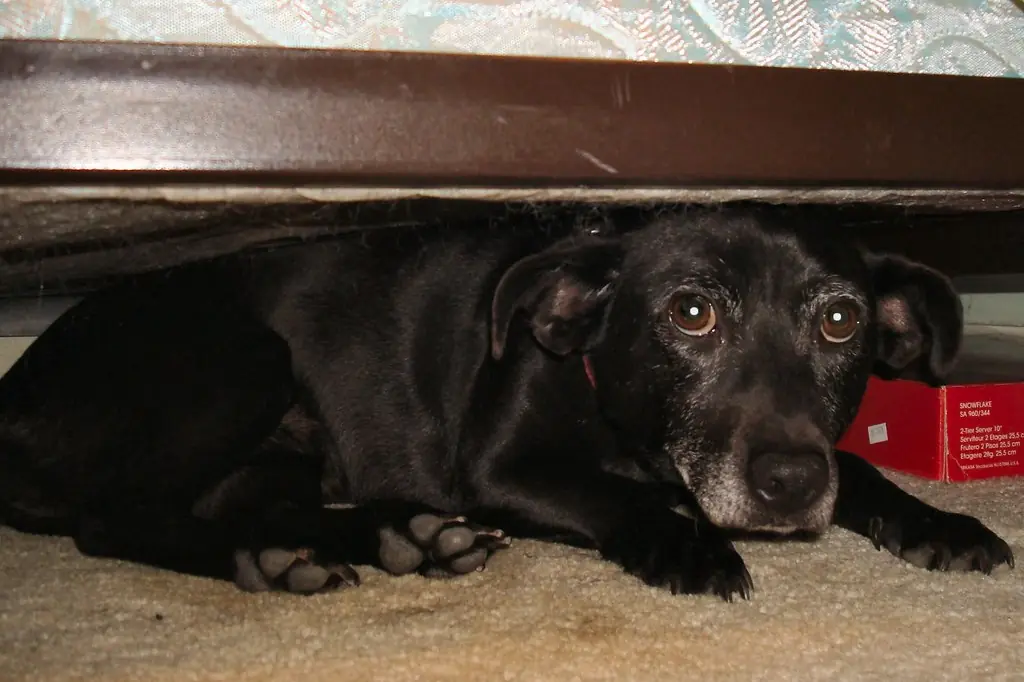
Diwali falls on Sunday, 8 November this year, but the noise doesn't keep to one night. The first rockets usually go up around Dhanteras on the 6th, the worst comes after the evening puja on the 8th, and it's often Bhai Dooj on the 10th before things settle. Plan for a difficult week, not a single evening.
A dog trembling under the bed is miserable, but safe. The dogs that end up at emergency clinics or on lost-dog posters are more often the ones that slipped their collar at the building gate when something went off, or picked up a half-burnt cracker from the road the next morning. Most of this plan is about stopping those two things.
Where are you in the week?
If your dog runs
Search close to home first. Most dogs that bolt are found nearby, hiding somewhere dark.
- Start right away, in your own building: the parking levels, the stairwells, under the cars, behind the generator.
- Post a clear photo and your number in your building and neighbourhood WhatsApp groups.
- Talk to the watchmen at the buildings around you. They notice everything that moves at night.
- Go back out at dawn, when the streets are quiet, and call softly. A lot of frightened dogs only come out once everything has gone silent.
- In the morning, call the vets and shelters nearby in case someone has brought your dog in.
Our dog [name] ran off near [street or building] at about [time] tonight. [Colour, size, collar]. Frightened by crackers, so may be hiding. Please don't chase. Call __ if you see them.
Two weeks out
Tag, collar fit, a vet conversation if last year was bad, and boarding booked.
Don't give your dog a sleeping pill or anxiety tablet of your own. A dose that's fine for you can be dangerous for a dog.
If you do board, ask where the kennels sit. A centre in the middle of a residential colony won't be any quieter than your flat, and a strange place plus fireworks is harder on most dogs than fireworks at home. Our boarding checklist covers the rest of what to ask.
Set up a den
The room furthest from the street, with the door open so your dog can choose it.
Pick the room furthest from the street. In most flats that's a bathroom, an inner corridor or a bedroom without an outside wall. Put your dog's bed in there with an old T-shirt of yours, some water and something to chew, and leave the door open. Dogs that choose a hiding place tend to settle. Dogs that are shut into one often panic.
When the noise starts:
- close the windows and draw the curtains, since the flashes bother some dogs as much as the bangs
- run a fan, the TV or music at a normal volume, to take the sharp edge off each explosion
- if your dog picks a spot under the bed or behind the sofa, let them stay there. Dragging a frightened dog out to comfort them usually does the opposite
The main evening
Long walk in the afternoon, dinner before sunset, last toilet trip on a leash before dark, then stay in.
In most cities the heaviest bursting comes in the first few hours after dark. Last year Karnataka allowed crackers only between 8 pm and 10 pm, and only green ones. Check what your state has ordered this year, but either way expect the worst after sunset.
- Take a long walk in the afternoon, while it's still quiet.
- Feed your dog an hour or two before sunset. Many anxious dogs won't touch food once the bangs begin.
- Do the last toilet trip before dark and keep it short, on a leash and harness even inside your own compound. This is when most dogs bolt.
- After that, if you can stay in, stay in. Dogs calm down much faster with someone they know nearby.
You may have heard that comforting a frightened dog "rewards the fear". It doesn't. Sit with them, talk quietly, stroke them if they want it. What doesn't help is scolding, laughing, or carrying them outside to "get used to it".
Don't take your dog out to watch the display, and don't leave them on a balcony or tied up outside, even for a few minutes.
The community dogs in your lane hear exactly what yours does, and they have nowhere to hide. If you feed them and your building allows it, leave the gate to a covered parking area or stairwell open for the night. Tying crackers to a dog or throwing them at one is cruelty under the Prevention of Cruelty to Animals Act. Report it to the police and to a local animal welfare group.
The morning after
Short leash, eyes on the ground, and a vet if your dog ate or touched any part of a cracker.
For a few days the roads will be littered with paper, wire and crackers that didn't fully go off. Dogs pick them up because they smell of food, and fireworks contain chemicals and heavy metals that can make a dog very ill. Keep the leash short and watch the ground.
Call a vet straight away if your dog has eaten any part of a cracker, sparkler or wire, has a burn (usually on the paws or face), has a red, watery or swollen eye, or is still vomiting, drooling heavily or shaking hours after the noise has stopped. Take the wrapper with you if you can.
24-hour vets in your city
Save the number of your nearest round-the-clock vet this week, before you need it. The tiles show how many vets and emergency clinics in each city publish 24-hour hours in our directory. Phone before you drive over, because "open 24 hours" doesn't always mean there's a vet in the building at 2 am.
- Hyderabad21 listed as open 24 hours. Health & emergencies in Hyderabad
- Noida20 listed as open 24 hours. Health & emergencies in Noida
- Bengaluru16 listed as open 24 hours. 24-hour vets in Bengaluru
- Kolkata13 listed as open 24 hours. Health & emergencies in Kolkata
- Gurugram12 listed as open 24 hours. Health & emergencies in Gurugram
- Mumbai10 listed as open 24 hours. Health & emergencies in Mumbai
- Delhi10 listed as open 24 hours. Health & emergencies in Delhi
- Ahmedabad10 listed as open 24 hours. Health & emergencies in Ahmedabad
- Chennai9 listed as open 24 hours. Health & emergencies in Chennai
- Chandigarh8 listed as open 24 hours. Health & emergencies in Chandigarh
- Kochi8 listed as open 24 hours. Health & emergencies in Kochi
- Pune4 listed as open 24 hours. Health & emergencies in Pune
Common questions
Quick answers to what people ask most.
Can I give my dog something to calm them down on Diwali?
Only what your vet prescribes, and ask this month, because some of these medicines need to be started several days before. Human sleeping pills and anxiety tablets aren't safe to use.
Do anxiety wraps or calming collars work?
Some dogs do seem calmer in a snug wrap, and trying one won't hurt. But it won't replace a quiet den, closed windows and you sitting nearby, and it won't do much for a dog with a real phobia.
Should I board my dog over Diwali?
Only if the place is quieter than your home and your dog already knows it. Otherwise you're adding a strange place to the fireworks.
My dog doesn't mind crackers. Is there anything I need to do?
Keep the ID tag on, the leash on in the compound, and your eyes on the road the next morning. Calm dogs still eat crackers, and they still slip their leads when a rocket goes off overhead.